Unlock Catholic Social Teaching

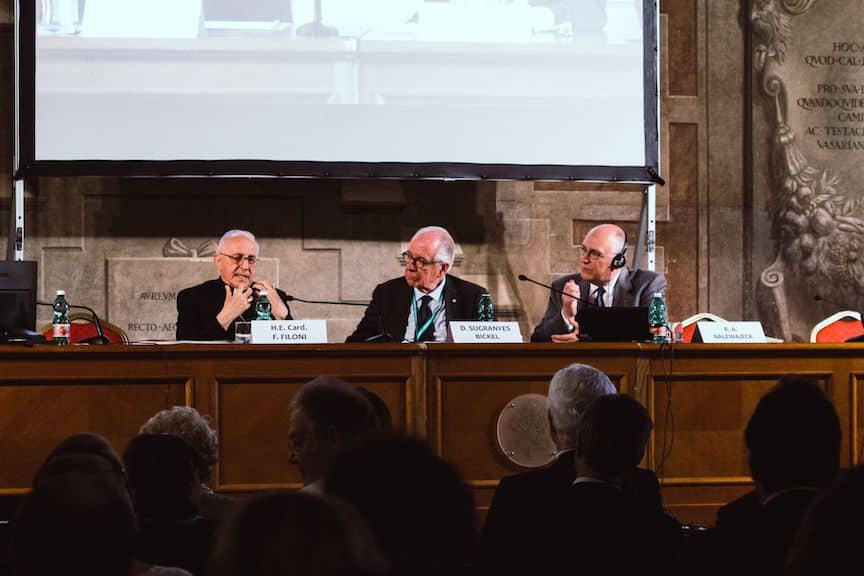
CAPP-USA is the United States affiliate of Fondazione Centesimus Annus Pro Pontifice, a Vatican-based foundation established by Pope St. John Paul II in 1993. Operating under the authority of the Holy See, our mission is to promote the knowledge and practice of Catholic Social Teaching and help people of good will apply the Church’s authentic social doctrine to the challenges of modern life.

“By her social doctrine the Church makes an effective contribution…

Her moral vision in this area ‘rests on the threefold cornerstone of human dignity, solidarity and subsidiarity’.

Catholic Social Teaching and Other Contemporary Issues

It is our special task to order and throw light upon all the affairs of the world in line with the teachings of Jesus Christ: “let the laity also by their combined efforts remedy the customs and conditions of the world.”

Lumen Gentium, 36

Transgenderism

We are facing a crisis in human sexuality caused by a representation of human anthropology that cancels out differences between men and women.

CLICK to read more.

Abortion

One of the most divisive issues during the past 50 years! Why is the Church so one-sided (and must always be so)?

CLICK to read more.

Racism is contrary to Christ and the teachings of the Gospel

Racism in the United States

The belief humanity can be divided into separate and exclusive biological entities with some races innately superior to others. This leads to personal and societal prejudice, discrimination, or antagonism directed against other people because they are of a different race or ethnicity. What does Catholic social teaching have to say about such an insidious “ism”? CLICK to read more.

The Church has consistently spoken out against socialism in all its forms, most recently, democratic socialism

Democratic Socialism

Candidates for President of the United States and many in congress espouse this as an alternative model for our country. What, exactly, is it? What does the Catholic Church say?

CLICK to read more.

Climate Change is a real issue and must be met with dialog, faith, and science, ordered toward the common good.

Climate Change

One political party committed the US to the Paris Agreement and proposes a “Green New Deal”. Another party withdrew from the Paris Agreement and inimically opposes the other’s proposal. What does Catholic social teaching say?

CLICK to read more.

Climate Change is a real issue and must be met with dialog, faith, and science, ordered toward the common good.

Immigration

The Church recognizes the rights of nations to govern and protect themselves in the interests of the Common Good and “…the right of all men to migrate to other countries and to seek conditions worthy of human life for themselves and for their families.” (Gaudium et Spes)

CLICK to read more.

national health care

Universal Healthcare

US health care is, in many ways, the envy of the world. Would universal, or national, healthcare improve it? See how Catholic social teaching can inform the discussion!

CLICK to read more.

Euthanasia

Without a Christian perspective, the world often seeks to avoid suffering at all costs and strives to make death as painless as possible. It is then that “[w]e must accompany people towards death, but not provoke death or facilitate any form of suicide.” (Pope Francis)

CLICK to read more.

The Family is the answer to the poisons destroying our society.

The Family

The answer to the dangers to our society.

“The future of humanity passes by way of the family.” (Pope St. John Paul II, 86)​

CLICK to read more.

marriage

Marriage

The foundation of the family.

"[T]ranscends the feelings and momentary needs of the couple”. It is born “from the depth of the obligation assumed by the spouses". (Pope Francis, 66)

CLICK to read more.

Climate Change is a real issue and must be met with dialog, faith, and science, ordered toward the common good.

Dignity of Work

"We were created with a vocation to work."

CLICK to read more.

Gun Control

It is one of the most divisive and painful issues in the United States. Gun ownership is an issue where there is legitimate diversity of opinion. How does the Church reconcile self-defense with the sacredness of human life?

CLICK to read more.

Overpopulation

From the Church’s perspective, the problem was never people themselves. The real question is not how many people the Earth can hold, but how we understand the human person.

CLICK to read more.

Climate Change is a real issue and must be met with dialog, faith, and science, ordered toward the common good.

The Death Penalty

The Church's historical teaching, the changes Pope Francis made, and what the Church teaches now.

CLICK to read more.

Covid-19 is tearing families, communities, and nations apart. Catholic social teaching can guide us through it.

COVID-19

The Crisis and the Cure: How does Catholic social teaching evaluate governments’ response?

CLICK to read more.

The Family is the answer to the poisons destroying our society.

The Common Good

The Common Good is not a principle, but an aspirational result: “the sum total of social conditions which allow people, either as groups or as individuals, to reach their fulfillment more fully and more easily”. (Catechism of the Catholic Church, 1906)

CLICK to read more.

God has called us to be stewards of this world, our physical environment and common home.

Physical Environment

This is about more than ‘just’ protecting the environment. There are profound spiritual dimensions involved.

CLICK to read more.

Physical and human environments are linked and only integral ecology can care or them both.

Integral Ecology

The solution to all our environmental problems!

CLICK to read more.

How many talk about the serious destruction of our human environment where we grow, live, and work?

Human Environment

“[W]e must also mention the more serious destruction of the human environment, something which is by no means receiving the attention it deserves.” (Pope St. John Paul II, 38)

CLICK to read more.

The Church has identified four dangers to society, pathologies, eating away at our culture.

The Four Dangers to Society

The Church identifies the major ‘risks and problems’ eating away at our cultural, economic and political systems. What are they?

CLICK to read more.

Consumerism is a terrible affliction of the developed world and an affront to human dignity.

Consumerism

Having and wanting a lot of ‘stuff’ is at the heart of several of society’s ills. Which ones? Why does this limit our freedom?

CLICK to read more.

Our environments, both our physical and human (moral), are in peril, in more ways than you likely realize

Environmental Degradation

Yes! The environment is in danger. But, it is actually worse (and, more complicated) than you think.

CLICK to read more.

alienation

Alienation

Society and individuals are alienated! We are “marked by a ‘globalization of indifference’ that makes us…closed in on ourselves.” (Pope Francis, 1)  The consequences are devastating!

CLICK to read more.

Radical Secularism

[COMING SOON]

“The greatest challenge of our time”! (Pope Benedict XVI, 3) Why? Radical secularism holds that there is no such thing as an objective truth. But, “Without truth, without trust and love for what is true...social action ends up serving private interests and the logic of power.” (Pope Benedict XVI, 5) Sound familiar?

A crowd waves American flags while helicopters fly past, but Catholic social teaching is neither liberal or conservative

Catholic Social Teaching is Neither Conservative Or Liberal

Just as “Christian charitable activity must be independent of parties and ideologies” (Pope Benedict XVI, 31) it must be reiterated and acknowledged that Catholic social teaching is not an endorsement of or for any political teaching. The Church is clear that none of the magisterial documents are teachings to or for the right or the left. Catholic social teaching is neither liberal nor conservative.


However, there are warnings to both sides of the political spectrum.

What Must I Do?

Our Church Has Issued a Clear Call to Action
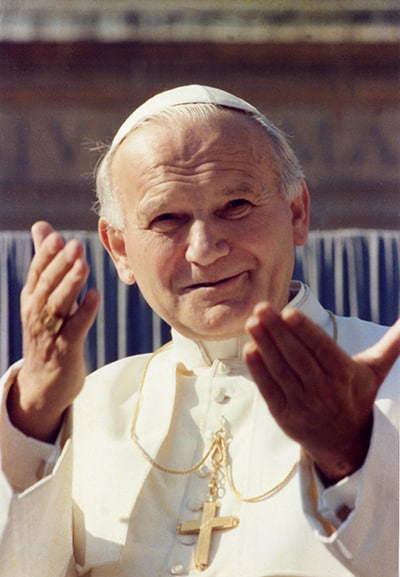
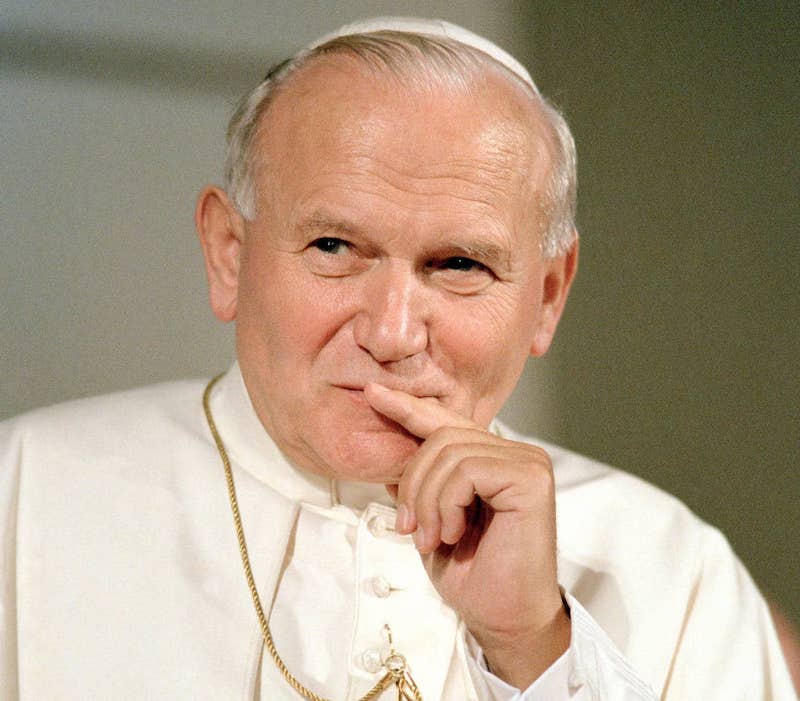
John Paul II was the first of the three modern popes to shape catholic social teaching.

Pope St. John Paul II

“A new state of affairs today… calls with a particular urgency for the action of the lay faithful. If lack of commitment is always unacceptable, the present time renders it even more so. It is not permissible for anyone to remain idle.”
– Christifideles Laici, 3

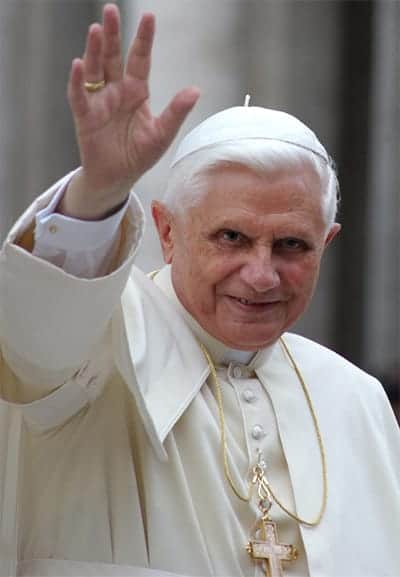
Benedict XVI is the second of the three modern popes to shape catholic social teaching.

Pope Benedict XVI

“Freedom…demands the courage to engage in civic life and to bring one’s deepest beliefs and values to reasoned public debate.”

– White House Address

Francis is the third of the three modern popes to shape catholic social teaching.

Pope Francis

Participation in politics is a Christian obligation: “We must participate in politics because politics is one of the highest forms of charity because it seeks the common good. And Christian lay people must work in politics…”
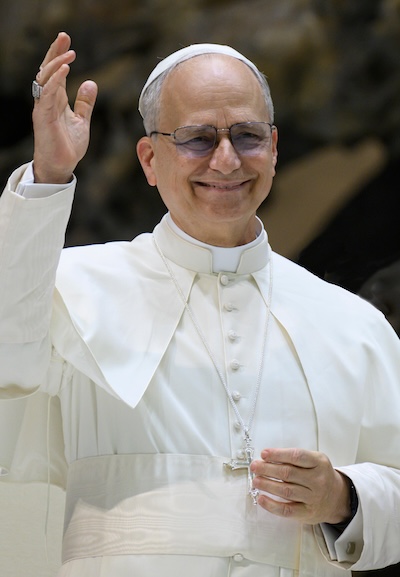
– Address to the Jesuit Schools of Italy and Albania

Benedict XVI is the second of the three modern popes to shape catholic social teaching.

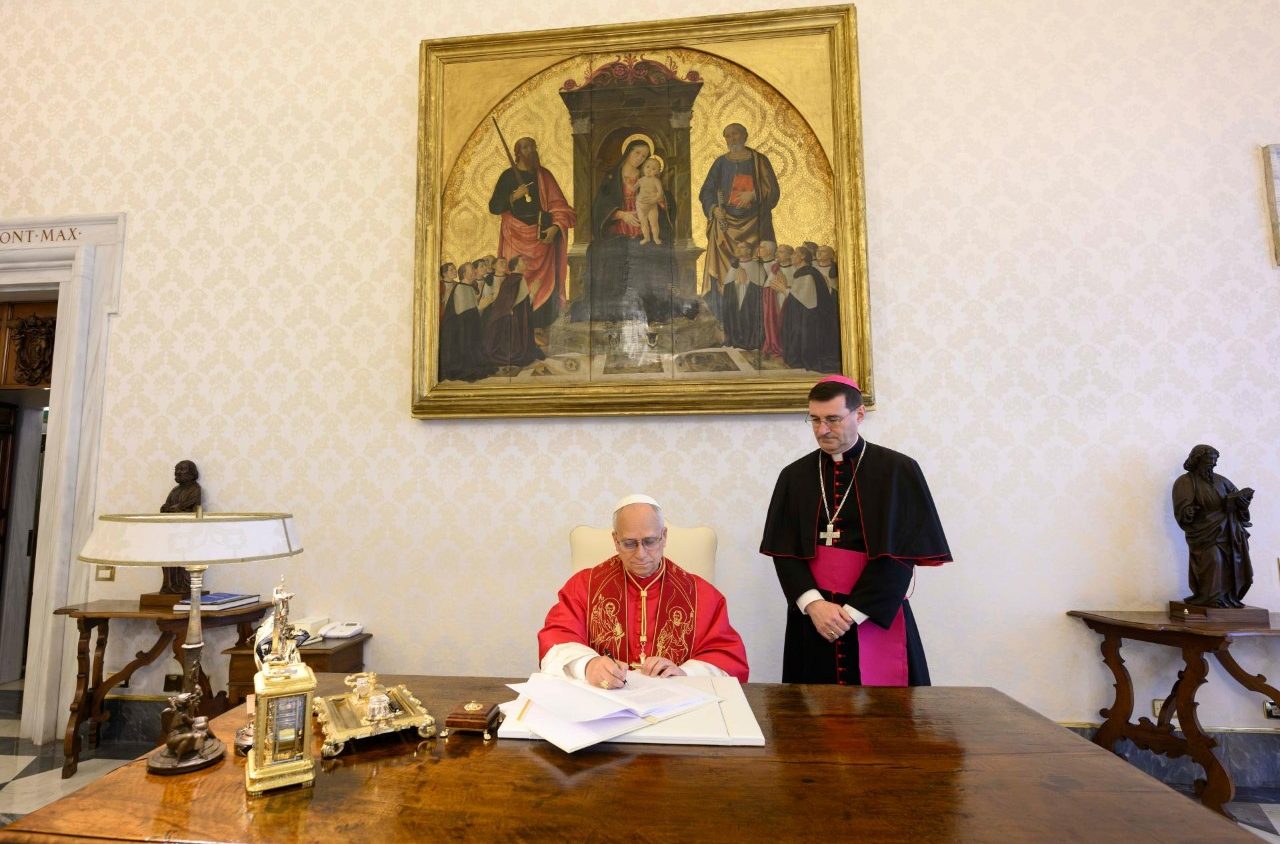
Pope Leo XIV

“There is a growing demand for the Church’s social doctrine, to which we need to respond.”

– Address to CAPP

“Working for a just distribution of the fruits of the earth and human labor is not mere philanthropy.
It is a moral obligation. For Christians, the responsibility is even greater: it is a commandment.”

The Vatican Fondazione

Visit the Study Center

Our Founder

CAPP-USA is the U.S. Affiliate of the Vatican-based foundation established by Pope St. John Paul II to promote the knowledge and practice of Catholic social teaching.

Events

Frequently Asked Questions:

CAPP-USA and Catholic Social Teaching

CAPP-USA answers common questions about its relationship with the Vatican-based Fondazione Centesimus Annus Pro Pontifice, its mission in the United States, and its work promoting Catholic Social Teaching. Learn more about our unique mandate as a Vatican-based Pontifical Foundation and our mission to advance Catholic Social Teaching in the United States.

CAPP-USA works to spread the knowledge and practice of Catholic social teaching in the United States.

What is CAPP-USA?

CAPP-USA (Centesimus Annus Pro Pontifice, Inc.) is the United States affiliate of the Vatican’s lay-led pontifical foundation Fondazione Centesimus Annus Pro Pontifice. It promotes the study and application of Catholic Social Teaching in public, economic, and social life.

Learn more about CAPP-USA

Who founded CAPP-USA and why?

Following his landmark social encyclical Centesimus Annus, Pope St. John Paul II established the Fondazione Centesimus Annus Pro Pontifice on June 5, 1993. CAPP-USA was later established in 2003 as the Foundation’s United States affiliate.

St. John Paul II recognized that the Church’s social doctrine was often not reaching the people most positioned to put it into practice—leaders in business, academia, government, and the professions. He created the Foundation “to promote and defend the knowledge and the practice of the Church’s social doctrine,” warning that “if this evangelization of the leadership sector is neglected… many who are a part of it will be guided by criteria alien to the Gospel.”

Four months before his death in 2005, he urged members of the Foundation to “spare no effort” to pursue these goals—a charge that continues to animate CAPP-USA’s mission today. (2004 Address)

Learn more about CAPP-USA’s founding and mission

Is CAPP-USA affiliated with the Vatican and part of the Catholic Church?

Yes. CAPP-USA is the U.S. affiliate of Fondazione Centesimus Annus Pro Pontifice, a pontifical foundation based at the Vatican and recognized under canon law as a juridical person. As such, we operate under the authority of the Holy See and in communion with the Catholic Church.

Through this relationship, CAPP-USA works to ensure that the Church’s authentic social doctrine—as articulated by the Magisterium—reaches Catholic leaders and people of good will across American public, economic, and cultural life.

Further, in the United States, CAPP-USA is also recognized as an “integrated auxiliary of the Roman Catholic Church” under U.S. Treasury regulations, reflecting its ecclesial relationship with the Catholic Church.

Legal & Ecclesial Status

What is CAPP-USA’s mission?

CAPP-USA’s mission is to evangelize lay leaders by forming their consciences in the principles of Catholic Social Teaching and supporting their efforts to apply the Church’s social doctrine in the economic, political, and the cultural life of society.

What is Catholic Social Teaching?

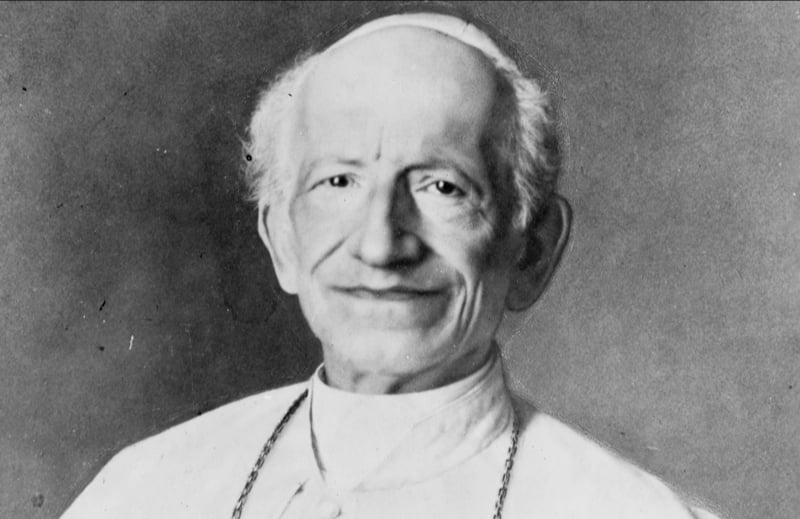
Catholic Social Teaching is the body of doctrine through which the Catholic Church applies the Gospel to social, economic, and political life. It traces its modern origins to Pope Leo XIII’s Rerum Novarum (1891) and is rooted in Scripture, Tradition, and the Magisterium. It forms consciences through principles such as human dignity, solidarity, and subsidiarity so society may pursue the common good.

Is Catholic Social Teaching a political ideology?

No. It is not a political ideology or economic program. It offers timeless principles—rooted in Scripture, Tradition, and the Magisterium—to help individuals and institutions evaluate social, economic, and political questions in light of the common good.

Read more: Catholic Social Teaching is Neither Conservative or Liberal 

How does CAPP-USA promote Catholic Social Teaching?

CAPP-USA advances Catholic Social Teaching through publications, public discussions, digital media, study programs, and events that explore how the Church’s social doctrine applies to contemporary economic, political, and social questions.

For example, in partnership with The Catholic University of America, CAPP-USA offers a graduate-level Certificate in Catholic Social Teaching—one of the few academic programs of its kind in the United States.

Does CAPP-USA represent official Catholic Church teaching?

CAPP-USA promotes and explains Catholic Social Teaching as articulated by the Magisterium of the Catholic.

Through our educational programs and publications, CAPP-USA helps Catholic leaders and people of good will understand and apply the Church’s social doctrine in contemporary economic, political, and cultural life.

What is the relationship between CAPP-USA and Pope Leo XIV?

Pope Leo XIV (elected on May 8, 2025) continued the longstanding relationship between the Holy See and the Fondazione Centesimus Annus Pro Pontifice from the earliest days of his pontificate.

Just nine days after his election, he granted members of the Foundation a private audience at the Vatican, telling us: “There is a growing demand for the Church’s social doctrine, to which we need to respond.”

His choice of the name “Leo” is deeply meaningful: Pope Leo XIII’s Rerum Novarum launched modern Catholic Social Teaching, and Pope Leo XIV explicitly connected it to today’s challenges—especially artificial intelligence and technological change—precisely the work CAPP-USA exists to advance.

In October 2025, he promulgated his first Apostolic Exhortation, Dilexi Te, calling Catholics to confront the structures of sin perpetuating poverty and inequality—themes central to Catholic Social Teaching and CAPP-USA’s mission.

Read Pope Leo XIV’s First Address to the Centesimus Annus Pro Pontifice Foundation

Have more questions? Explore our full library of Catholic Social Teaching resources.

Sign Up For Our Newsletter:

CAPP-USA (Centesimus Annus Pro Pontifice, Inc.) is the United States affiliate of the Vatican-based pontifical foundation of Fondazione Centesimus Annus Pro Pontifice, established by Pope St. John Paul II in 1993 to promote Catholic Social Teaching in fidelity to the Magisterium of the Catholic Church. CAPP-USA is a 501(c)(3) nonprofit organization.
Sitemap

Phone: (888) 473-3331
Address: 295 Madison Avenue, 12th Floor, New York, NY, 10017